
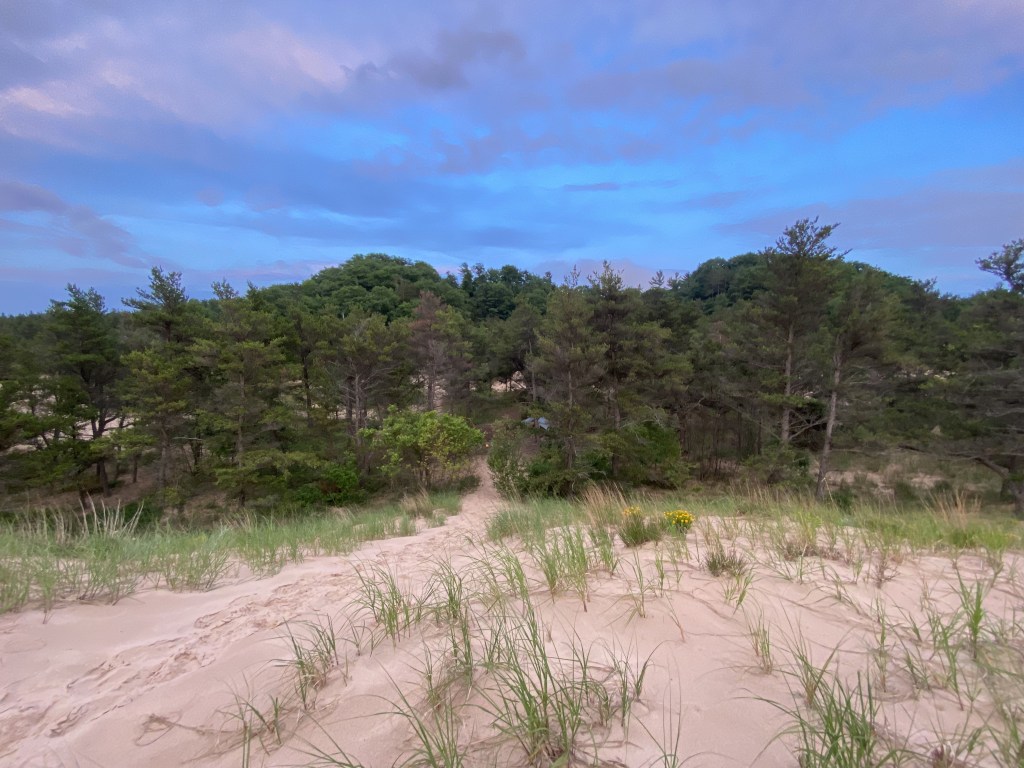
A Wilderness Area is managed especially to preserve the feeling of untouched nature. You won’t find a bathroom, drinking fountains, or even many trail signs at Nordhouse Dunes Wilderness Area.
Congress designated this 3,450 acre slice of PARADISE in 1987, and Nordhouse Dunes is one of only two federally designated wilderness areas in Michigan’s Lower Peninsula. What is the other wilderness area, you may ask? It’s the Sleeping Bear Dunes National Lakeshore, which was designated in 2014!
A wilderness area is designated for preservation in its natural condition and managed as part of the National Wilderness Preservation System in accordance with the Wilderness Act of 1964. The Wilderness Act of 1964 defines wilderness as “an area where the earth and its community of life are untrammeled by man, where man himself is a visitor who does not remain.”
The term “wilderness character” was first referenced in the 1964 Wilderness Act. The Act states that federal agencies are responsible for preserving the wilderness character that is related to the natural features of that place as well as the personal experiences a person can have when in a place free of human society and construction.
The following five categories are features of wilderness character that are protected under the designation.
Natural Quality
“Ecological systems are substantially free from the effects of modern civilization.”
This means that the nature at Nordhouse hasn’t been developed for visitor use. No roads, no lights, and minimal signage. Instead, the land is mostly left alone and people who visit can experience a direct connection with nature. Visitors who haven’t been to a Wilderness Area before should know that it won’t be the same as a park or campground. Check out the trail map and regulations at the trailhead. You won’t be sorry.
Untrammeled Quality
Untrammeled doesn’t mean the same thing as untrampled! Instead this means that wilderness is essentially unhindered and free from the intentional actions of human control or manipulation. In a wilderness area, nature is allowed to take its own course.
Undeveloped Quality
“Wilderness is essentially without permanent improvements or the sights and sounds of modern human occupation.”
Yep, no running water or bathrooms, no paved trails. Instead, we get the opportunity to connect to the source! You can feel small under the dark skies, drink deeply of Lake Michigan (don’t forget your water filter or iodine tabs!), and use your compass and senses to orient yourself and explore. Be ready to take care of yourself and the wild land that makes it all possible.
Opportunities for Solitude or Primitive and Unconfined Recreation Quality
“Wilderness provides opportunities for solitude or a primitive and unconfined type of recreation.”
Nordhouse Dunes is pretty busy on a summer weekend and you may not find much solitude out near the lakeshore. However, solitude can be found by those who seek it. The Algoma Trail and the backcountry behind the sand dunes still offers the opportunity to experience solitude. Spring and fall are good times to find some stillness as well.
Other Features of Value Quality
“Wilderness may also contain ecological, geological, or other features of scientific, educational, scenic, or historical value.”
In addition, some practical questions used to determine suitability include:
- Is the area 5,000 acres in size or larger? Or a roadless island?
- Does the area generally appear to be natural, and is human presence relatively unnoticeable?
- Does the area offer the opportunity for primitive and unconfined recreational activities like camping, hiking, and skiing?
- Does it provide opportunities for solitude?
- Does the area contain features of ecological, geological, scientific, educational, scenic/aesthetic, or historical/cultural significance?
You may have noticed that a wilderness area should be at least 5,000 acres and Nordhouse Dunes is only 3,450 acres. Good catch! Although small compared to other Wilderness Areas, Nordhouse was preserved due to the globally-rare freshwater dune ecosystems that include threatened and endangered species like the shorebird named the Piping plover and the plant called Pitcher’s thistle. Both of these species rely on sand dune habitats and are indicators of a dune community that is healthy and thriving. Learn more about Michigan’s dune treasures at the Michigan Natural Features Inventory summary of dune ecosystems.
When President Johnson signed the wilderness act, he said this:
“If future generations are to remember us with gratitude rather than contempt, we must leave them something more than the miracles of technology. We must leave them a glimpse of the world as it was in the beginning, not just after we got through it.”
These words still ring true today. We want to leave future generations a Nordhouse Dunes Wilderness that will endure!
Visit wilderness.org and wilderness.net to learn more about wilderness.

 Friends of Nordhouse Dunes