
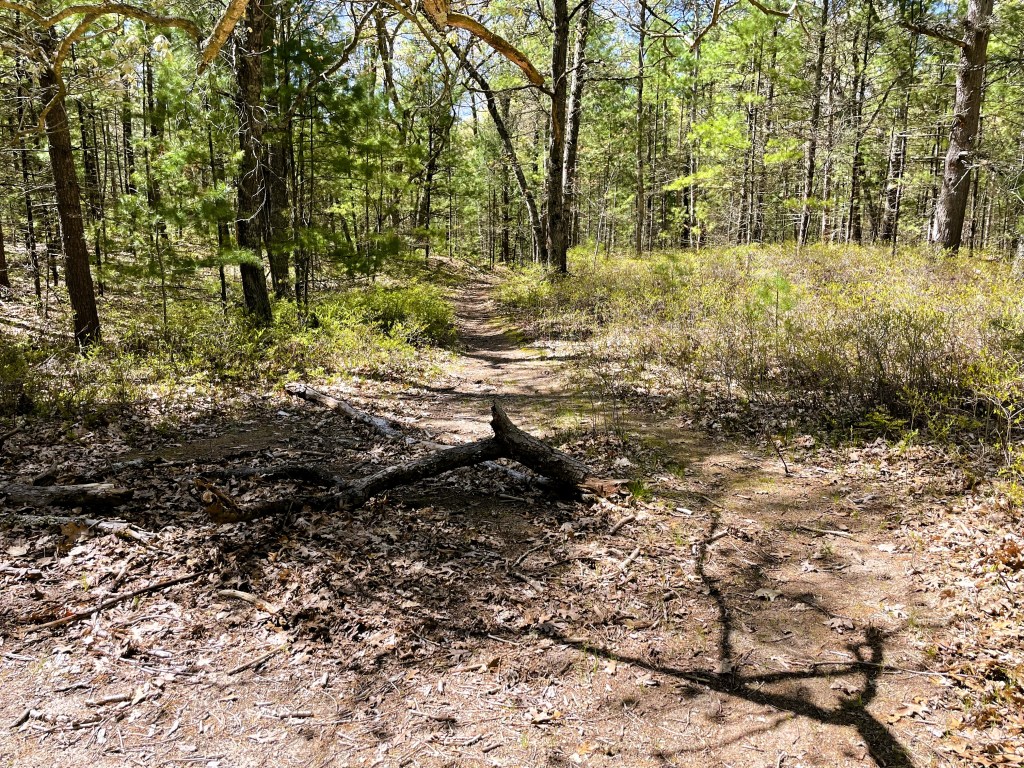
If you’re walking through Nordhouse Dunes, you might come across a trail that’s not on the map. Why is it there, and should you take it?
It’s likely a social trail—and you shouldn’t take it. Social trails are unofficial, visitor-created paths that form when people deviate from a trail. Sometimes it’s because a camper or hiker wants to take a shortcut or explore. We don’t blame you! But over time, as the individual takes that path more consistently, or as other people start to follow it, the foot traffic can make the path look like a real trail.
Aside from safety concerns and the possibility of getting lost, social trails can also cause harm to our beloved Nordhouse Dunes!
Does Nordhouse Dunes Have Social Trails? How Can I Spot Them?
Nordhouse Dunes does have a few social trails, most noticeably off the Nurnberg Trail. One of the best ways to tell if a trail is a social trail is to check a map. If it’s not on the map, it’s not a real trail.
Another way you might be able to tell if a trail isn’t marked is if it appears to be blocked at all. In past years, Friends of Nordhouse Dunes has worked with the Forest Service Staff to block off social trails by covering the first few yards with fallen limbs, leaves, and brush—it’s pretty noticeable. It doesn’t look naturally-occuring at all.
You might be tempted to try and navigate through the blockade or walk around it, but there a few reasons why it’s best—for you and the wilderness area—to stick to the marked trail.
It’s Easier to Get Lost
Because social trails aren’t marked or on a map, there’s no way for you to know where they go or where they end. It’s easier to get turned around or lost. This can be dangerous if you don’t have enough water or appropriate clothing for the temperature or weather. It can also make it harder for forest staff to find you in the event you need help or assistance.
Trails Aren’t Maintained
Marked trails at Nordhouse Dunes are maintained. If a tree falls and blocks the path, staff will work hard to clear it as soon as possible. But social trails are not maintained in the same way, which can jeopardize your safety.
They Can Be Harmful for the Environment
Designated trails in wilderness areas are often created to protect the environment. Not only can human presence startle and scare animals from areas where they typically feel safe, but foot traffic can be harmful for any native plants trying to grow. It can also increase erosion, especially in Nordhouse’s fragile dunescape.
What Can You Do?
Staying on designated trails is one way you can help protect the beautiful environment of Nordhouse Dunes Wilderness Area while still getting the opportunity to explore and enjoy nature. If you see anyone taking a social trail, consider letting them know it’s not a designated trail or let forest service staff know you saw someone taking one. Social trails can look a lot like a real trail, so it can be easy to accidentally find yourself on one!

 Friends of Nordhouse Dunes